Art · Culture · Heritage
Art in Valencia: History, Artists, Museums and Contemporary Culture
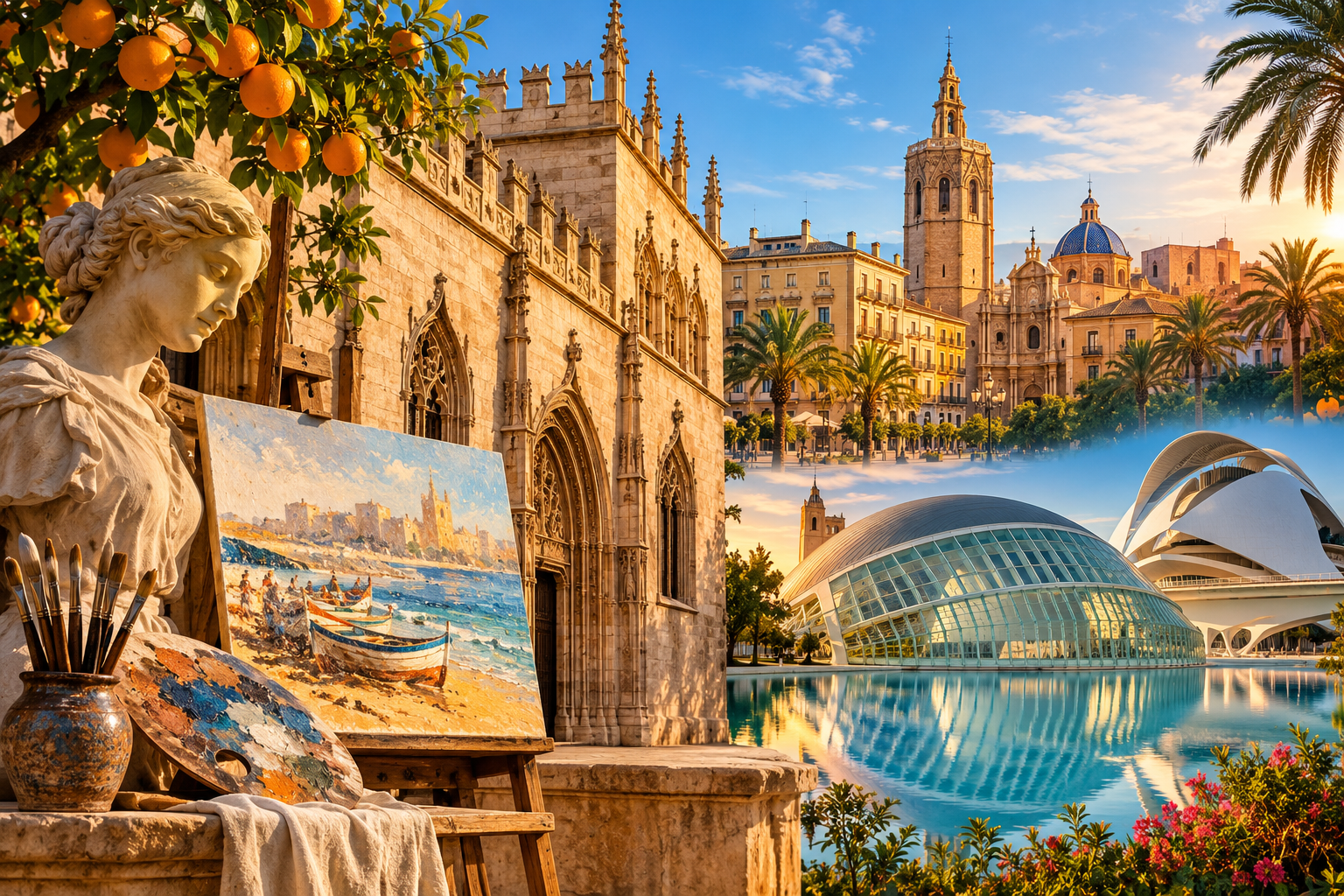
Valencia is a city where centuries of artistic tradition, monumental architecture and new forms of expression coexist. Exploring its heritage reveals how art has helped shape the city’s identity and continues to transform its cultural spaces.
Valencian Art: An Identity Shaped Over Time
Exploring art in Valencia means discovering a history shaped by different cultures, commercial exchanges, craft traditions and creative movements. The city and its surrounding region have developed a diverse heritage that brings together historic buildings, painting, sculpture, ceramics and contemporary artistic practices.
This richness is not found exclusively in major museums. It can also be discovered in streets, squares, civic buildings, churches and the architectural details that form part of everyday life.
To understand Valencia’s artistic landscape, it is worth looking at how each period has left its mark and how later generations have reinterpreted that legacy.
From Medieval Tradition to Artistic Splendour
Valencia’s historic heritage preserves traces of different stages in the city’s development. Gothic architecture, religious buildings and civic structures reveal the importance Valencia once held as a commercial and cultural centre.
For centuries, artisan workshops played a fundamental role in producing decorative objects, altarpieces, ceramic pieces and works intended for both religious spaces and private residences.
Ceramic traditions deserve special attention. Valencia’s relationship with tile-making and decorative ceramics is part of a distinctive visual culture in which geometric patterns, colours and artisanal techniques have evolved over time.
Joaquín Sorolla and the Light of the Mediterranean
One of the essential names in Valencian painting is Joaquín Sorolla. Born in Valencia in 1863, he developed an internationally recognised body of work known for its treatment of light, movement and atmospheric effects.
His beach scenes, portraits and depictions of everyday life reveal his ability to capture Mediterranean brightness through dynamic brushwork and extraordinary colour sensitivity.
His paintings help us understand the relationship between landscape, local identity and artistic modernisation in the late nineteenth and early twentieth centuries. Sorolla also demonstrates how an artist can draw inspiration from a familiar environment and develop a visual language with universal appeal.
Other Artists Who Enriched Valencia’s Artistic Landscape
The history of Valencian art cannot be summed up in a single name. Over the years, different artists have explored painting, sculpture, illustration and other disciplines, contributing to a wider range of ways to represent reality.
Ignacio Pinazo is a notable figure for his evolution from academic approaches towards a freer and more expressive style of painting. His work forms a bridge between nineteenth-century traditions and the new artistic sensibilities that emerged at the turn of the century.
José Benlliure is also an important artist to explore. His work offers insight into the painting of his time, from scenes of everyday life to historical and religious compositions.
Getting to know these artists helps us understand that Valencian visual identity has developed through different movements, concerns and ways of looking at the world.
Museums in Valencia for Discovering Its Heritage
Museums are among the best ways to explore Valencian art. Their collections reveal works from different periods, allow visitors to compare styles and show how artistic techniques and themes change throughout history.
Valencia Museum of Fine Arts
Its collection offers a journey through painting and other artistic disciplines, with a particular focus on Old Masters and artists connected with the Valencian tradition. It is an essential reference for anyone wishing to explore the evolution of art in the city.
IVAM: Modern and Contemporary Art
The Institut Valencià d’Art Modern offers a different perspective, focusing on the transformations of modern and contemporary art. Its exhibitions and collections introduce visitors to experimentation, avant-garde movements and the visual languages of the twentieth and twenty-first centuries.
National Museum of Ceramics
Located in the Palace of the Marqués de Dos Aguas, this museum explores the history of ceramics and decorative arts. The building itself is an outstanding example of Valencia’s architectural heritage.
Architecture and Art in the Streets of Valencia
Valencian art can also be discovered on foot. The historic centre preserves buildings and public spaces that reveal the city’s urban evolution, from medieval structures to architectural interventions from later periods.
The Silk Exchange, known as La Lonja de la Seda and recognised as a UNESCO World Heritage Site, is one of the finest examples of Valencian civil Gothic architecture. Its columns, vaults and proportions show how architecture can fulfil a practical purpose while expressing extraordinary aesthetic ambition.
Modernisme also left a significant mark on Valencia. Ornate façades, ceramic elements, wrought-iron details and natural motifs turn many buildings into artistic compositions in their own right.
Taking the time to observe these spaces reveals details that are often overlooked: reliefs, textures, symbols, plays of light and decorative features that reflect the tastes of each period.
Galleries, Exhibitions and Contemporary Creativity
Alongside its historic heritage, Valencia has an artistic scene that connects creators, galleries, collectors and audiences interested in new ideas. Temporary exhibitions and independent projects offer opportunities to discover different artistic languages and reflect on the social and cultural changes of our time.
Contemporary art is not limited to painting and sculpture. Photography, installation art, digital art and multidisciplinary practices expand the possibilities of expression and challenge traditional boundaries between artistic disciplines.
To explore other perspectives on contemporary artistic practice, it is also worth discovering the work and projects of Aleksandra Istorik, whose work forms part of a broader conversation about art and its interpretation.
Visiting exhibitions, checking cultural programmes and following the activities of art spaces makes it easier to discover projects that may not appear on conventional tourist itineraries.
How to Enjoy Art in Valencia
You do not need specialist knowledge to appreciate a work of art. A visit can begin simply by observing colours, shapes, materials and the way a composition is organised.
It is also useful to consider the context: who created the work, when it was made, what purpose it served and which ideas or concerns may have influenced its development. These questions help create a more personal connection with what you see.
- Combine visits to historic museums with contemporary exhibitions.
- Allow time to observe the details of buildings and public spaces.
- Check cultural events and temporary exhibitions before planning your visit.
- Read the information accompanying artworks, but also spend a few minutes observing them without distractions.
- Compare different styles to understand how artistic ideas and techniques evolve.
With this approach, a cultural visit becomes a more rewarding experience, whether you are discovering art for the first time or looking to deepen your knowledge.
Valencian Art as Part of Cultural Identity
Artistic heritage is more than a reminder of the past. It is also a way to understand the present and pass knowledge from one generation to the next. Artworks, buildings and craft traditions preserve stories that help us interpret the evolution of a society.
In Valencia, the coexistence of historic monuments, museum collections, exhibition spaces and new creative projects shows that culture is dynamic. Tradition can provide a starting point for new ideas, while contemporary creativity offers fresh ways to reinterpret the surrounding world.
Exploring art in Valencia is therefore a way to get to know the city more deeply: its influences, transformations and the diversity of perspectives that have helped shape its identity.
Frequently Asked Questions About Art in Valencia
Which Valencian artists are worth discovering?
Joaquín Sorolla, Ignacio Pinazo and José Benlliure are among the key figures for understanding the evolution of Valencian painting and its relationship with artistic movements from different periods.
Which museums should you visit to discover art in Valencia?
The Valencia Museum of Fine Arts, IVAM and the National Museum of Ceramics are three important options, each offering different collections and perspectives.
Where can you see Valencia’s historic architecture?
The historic centre offers numerous examples, including the Silk Exchange and buildings featuring Gothic and Modernista elements. Walking through its streets reveals architectural and decorative details from different periods.
Does Valencia have contemporary art as well?
Yes. In addition to its historic collections, the city has modern art museums, temporary exhibitions and spaces showcasing photography, installation art, digital art and other forms of contemporary creativity.
How can you plan a cultural route through Valencia?
A good option is to combine a walk through the historic centre with a museum visit and time to explore a temporary exhibition. Check opening hours, admission arrangements and each venue’s programme in advance.